Emergency jobs are some of the best paid work a plumber, electrician or heating engineer can get. They are also won or lost faster than anything else. Someone standing in a puddle is not comparing five websites over a cup of tea. They open two or three results and call whoever answers their questions quickest.
In our experience most of that decision happens on the first screen, in well under half a minute, and usually on a phone. Here is what that screen and the rest of the site need to get right.
1. A phone number they can tap straight away
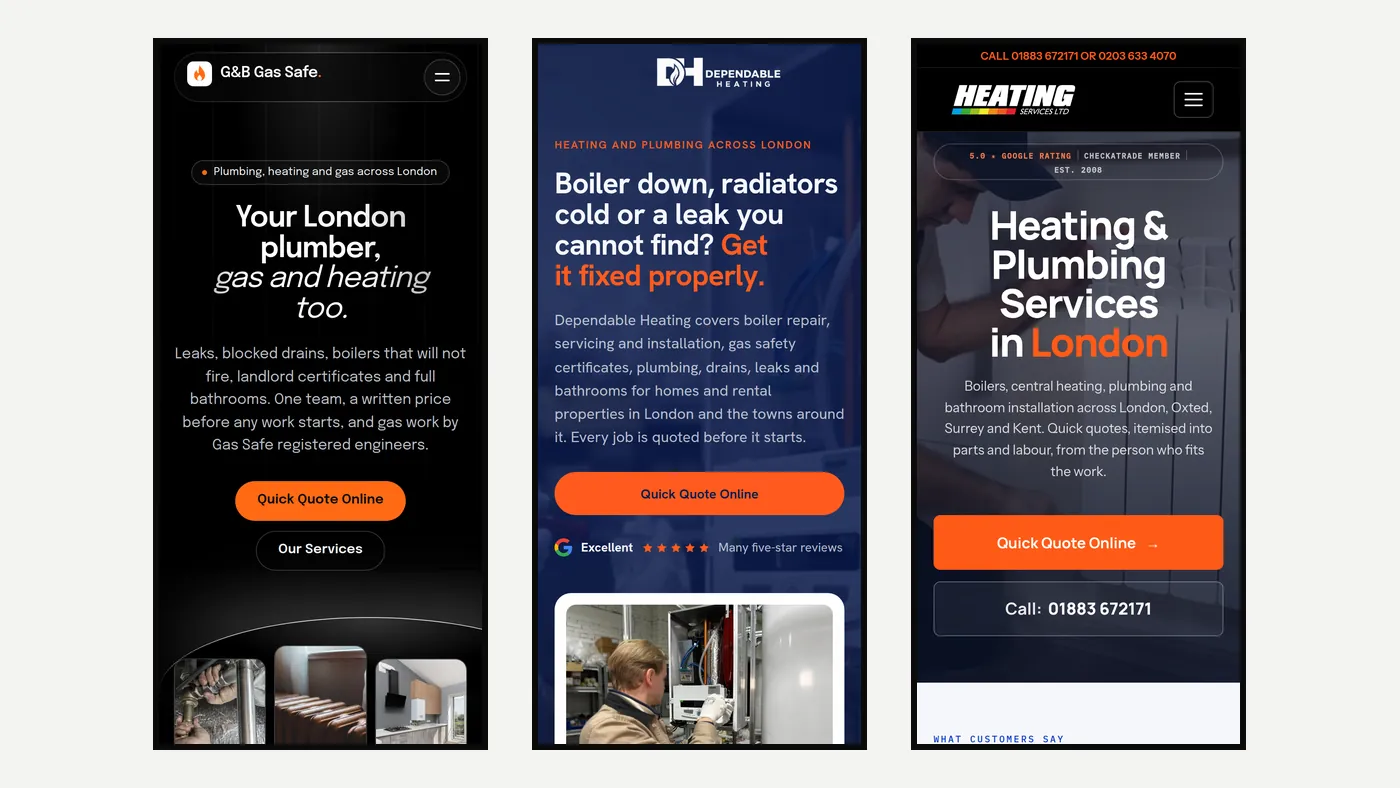
Most visits to a trades website come from a phone, and for emergency searches that is even more true. Your number should sit at the top of every page as a tap-to-call button, and stay in view as people scroll.
Do not make them hunt for it on a contact page or copy it out of a footer. Every extra step is a chance for them to go back to Google and try someone else.
Check it yourself. Open your site on your own phone, tap the number and make sure it rings the phone you actually carry. It sounds basic, but we regularly find numbers that dial an old landline, or are shown as an image that cannot be tapped at all. If you use a different number for out of hours work, show that one on your emergency pages.
2. Plain words about what you fix and how fast
The headline should say what you do in the words a customer would use: burst pipes, boiler breakdowns, no hot water, tripping electrics. Leave the clever slogans for the van.
If you offer same day or out of hours callouts, say so clearly, along with any callout charge. If you do not, be honest about it. A customer who feels misled at nine at night will not be leaving you a good review.
3. The towns and postcodes you cover
The second question anyone asks is whether you come to them. List the towns and areas you cover near the top of the page, by name. Local people search with place names, and Google uses the same words to decide which businesses to show.
A line such as "Emergency plumber covering Guildford, Woking and Farnham" does more work than a map image with no text.
If you cover a wide area but only take emergency work close to base, say that too. It saves you calls you would have to turn down, and it tells the people who are close by that you are the right choice.
4. Proof you are real and qualified
Emergency customers are letting a stranger into their home at short notice, often while stressed. They look for quick signs of trust: recent reviews with names, your Gas Safe or NICEIC registration where it applies, and a real photo of you or your van.
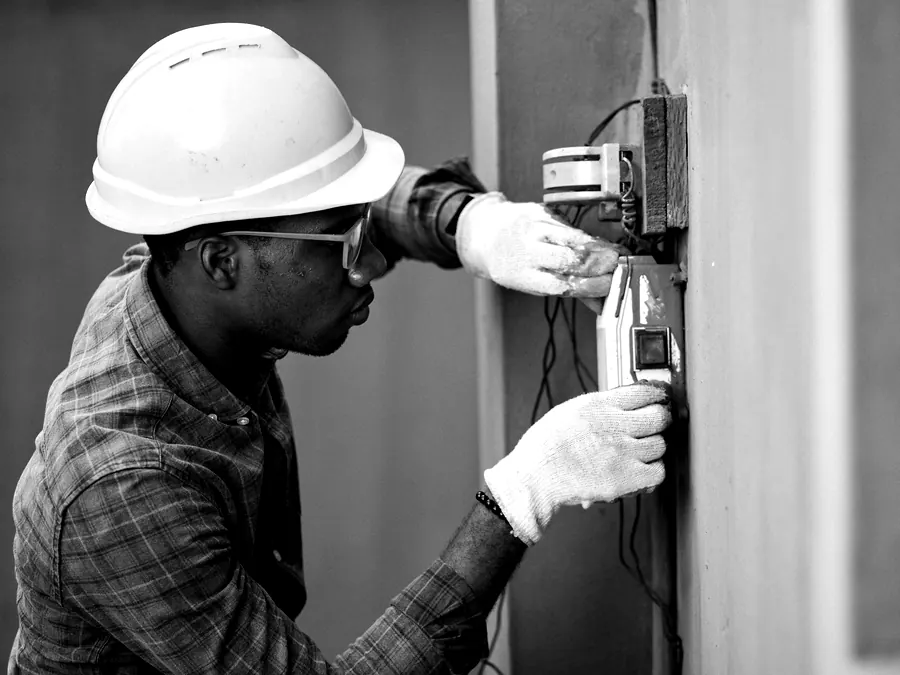
Stock photos work against you here. People recognise them, and a smiling model in a spotless hard hat makes a business feel less real, not more. Your own photos, even from a phone, do a better job.
Put a short review or two near the top of the page rather than on a separate reviews page. A few words from a customer in a nearby town who had the same problem, saying you turned up when you said you would, are worth more than a paragraph about your values.
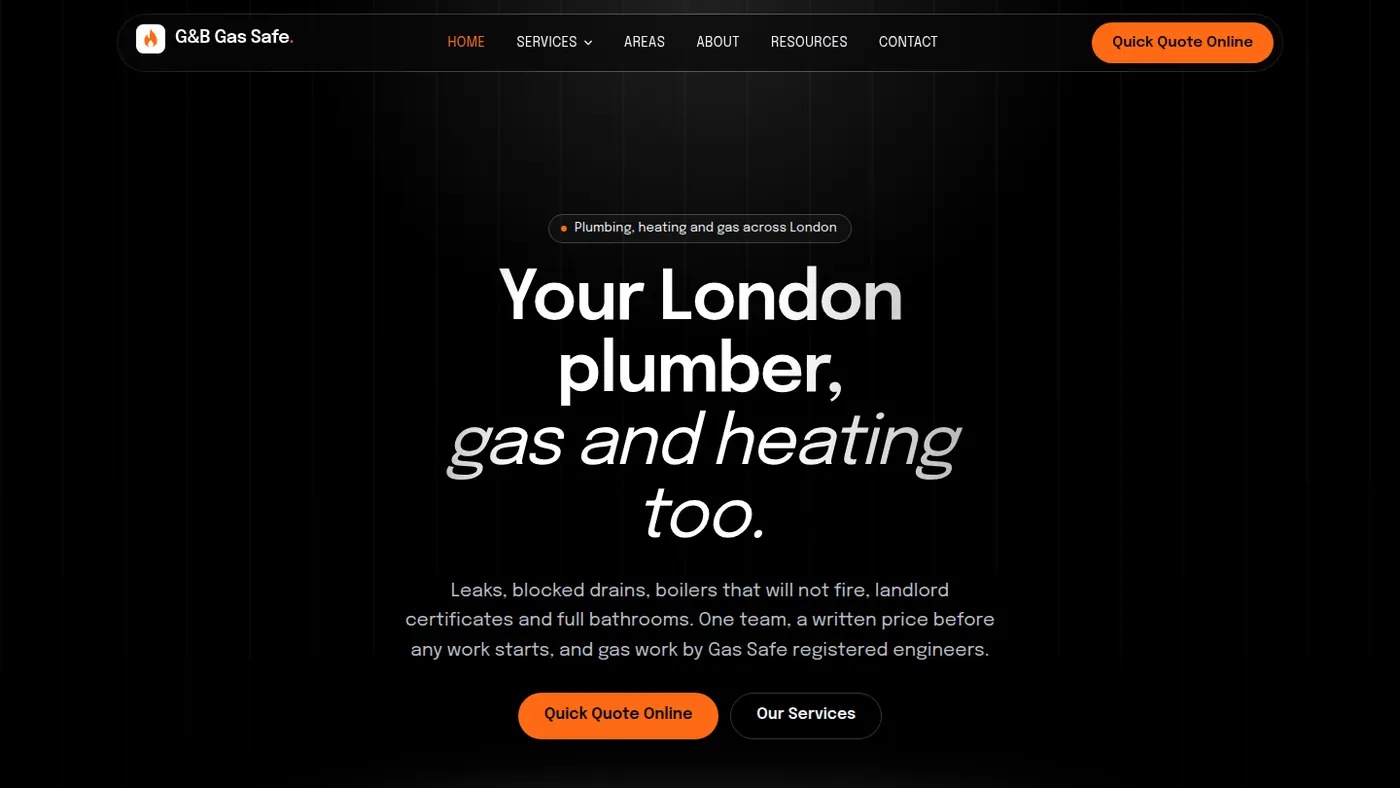
5. A page for each emergency job you want
One general services page cannot rank for everything. If you want boiler breakdown callouts, give them their own page. Do the same for burst pipes, blocked drains or electrical faults, whichever you actually want more of.
Each page should cover the problem, what you do when you arrive, how you price, the areas you cover and that tap-to-call number again. It gives Google a clear match for the search, and gives the customer a page that talks about exactly their problem.
Keep the wording honest. If you do not do a certain job out of hours, a page promising it will only bring calls you have to turn away, and disappointed people rarely come back.
6. A site that loads on a weak signal
Emergency calls often come from people standing in a cold kitchen or a loft with one bar of signal. If your homepage takes several seconds to show anything, many of them will give up before they see your number.
As a rough bar, aim for your main content to show in under about three seconds on a normal 4G connection. That usually means compressed photos, no autoplay video and no heavy page builder add-ons. A plainer site that loads fast will win more calls than a beautiful one that stalls.
7. A way to reach you when you cannot answer
You cannot pick up while you are under a floor or up a ladder. Give people a second option that takes seconds: a short form or a Quick Quote button asking for their name, number, postcode and a line about the problem.
Keep the form short. Every extra box is another reason for someone standing in a flooded kitchen to give up. You can ask for the details you need when you call them back.
Make sure those messages reach your phone straight away, and reply as soon as you can. Many emergency jobs go to whoever calls back first, not whoever is cheapest.
Get these seven things right and your website stops being a brochure and starts taking calls for you, even on the nights you are already out on a job.