Plenty of plumbers have built a solid business with no website at all. A van, a phone number and a good name locally can keep the diary full for years. So it is fair to ask why a website matters now, and whether it is worth the money.
The short answer is that the way people choose a plumber has changed, even when they were recommended to you. The longer answer is below, along with what a plumbing website actually needs to do, so you can judge any site, ours or anyone else's, against it.
Customers look you up even when they were recommended
A neighbour gives someone your name. Before that person picks up the phone, they search for you. They want to see that you are real, that you do the job they need, that you cover their street and that other people have been happy with your work.
If they find nothing, or an old listing with a number that no longer works, a good share of them will simply search for "plumber near me" and call whoever looks most trustworthy. You lose a job that was already yours. A clear website turns a recommendation into a booked job instead of a lead for someone else.
Word of mouth has a ceiling
Recommendations are the best leads you will ever get, but you cannot control how many arrive or what kind of work they bring. Quiet months stay quiet. And word of mouth tends to bring more of the same: if you are known for small repairs, you get small repairs.
A website lets you choose. If you want more bathroom installs, boiler swaps or landlord work, you can build pages around those jobs and put them in front of people searching for exactly that. It is the one marketing channel where you decide what you are known for.
It also works while you are on the tools. A customer with a leaking pipe at nine at night can read what you do, see your reviews and send you the details of the job, ready for you to call back in the morning.
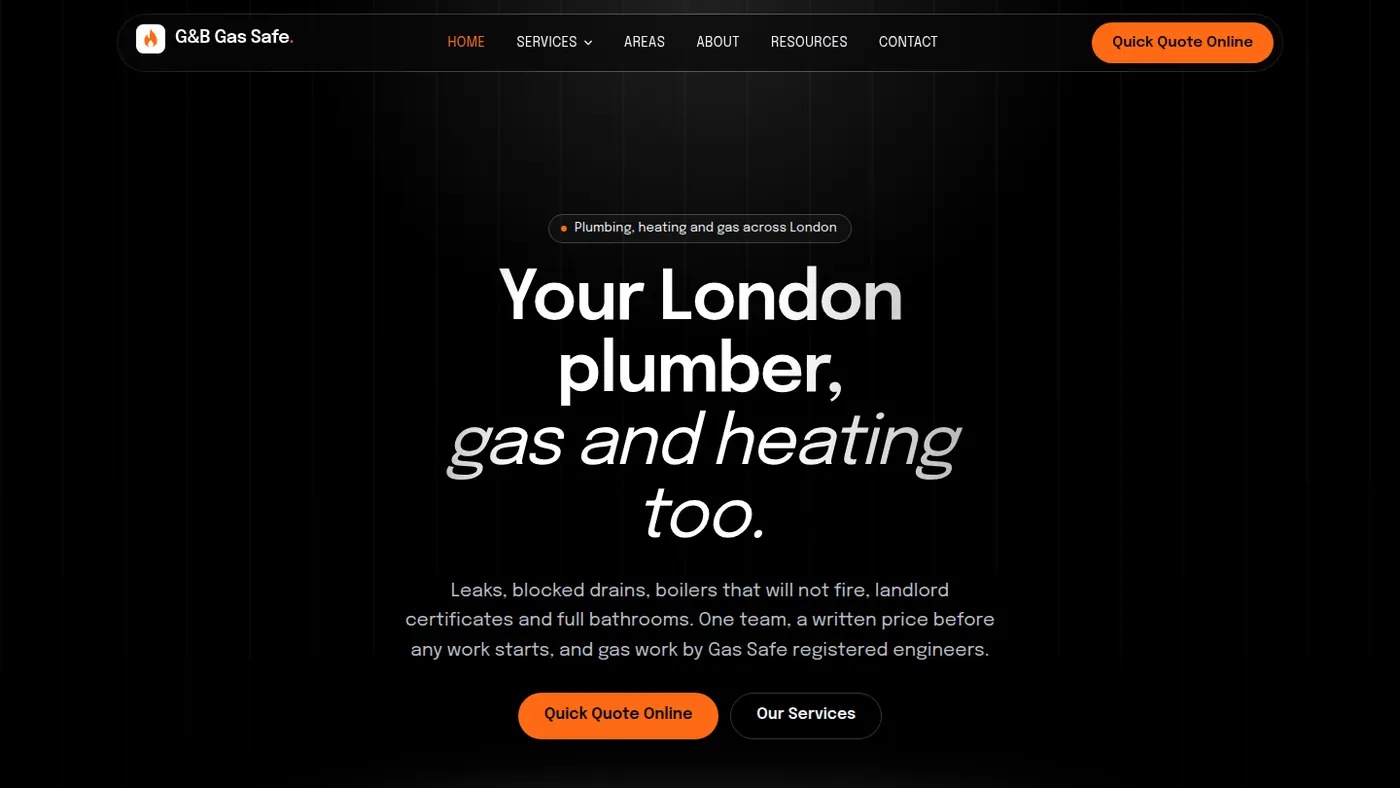
What a plumbing website actually needs
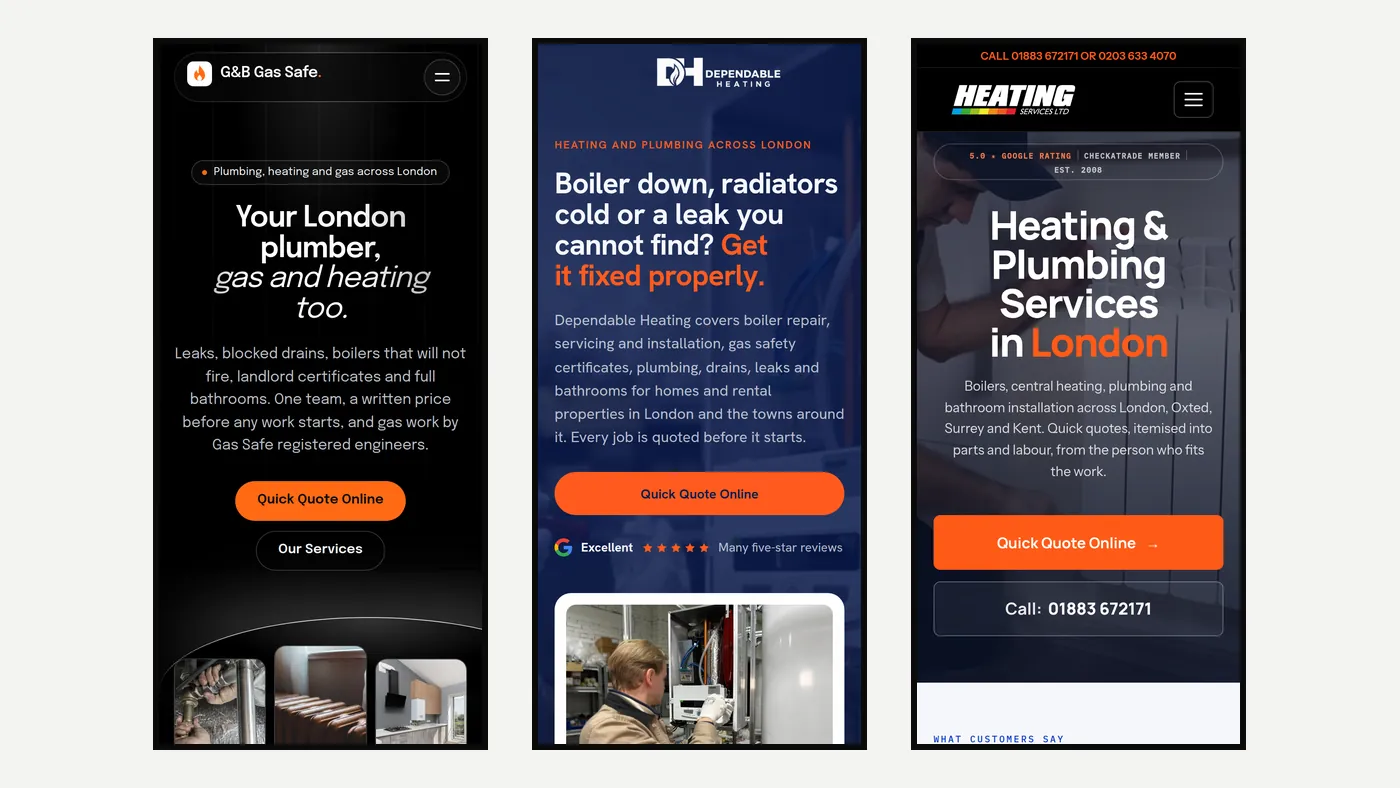
A plumbing website does not need to be clever. It needs to answer three questions in the first few seconds: do you do this job, do you cover my area, and how do I get hold of you.
- A clear headline that says what you do and where, in plain words.
- A page for each main job: boiler repairs, leaks, bathrooms, drains, landlord certificates. One job per page.
- A short quote form on every page. Name, phone, postcode and the job. Anything longer gets abandoned.
- Proof: real photos of your work, your reviews and your Gas Safe or other registration numbers.
- A tap-to-call number that is always easy to find on a phone.
Everything else is decoration. A site that nails these five things will beat a flashier site that makes people hunt for the phone number.
Show up where people are searching: the map and the towns
Most plumbing searches are local: "emergency plumber Croydon", "boiler repair near me". Google answers them with a map of nearby businesses and a list of websites underneath. To appear in either, Google needs to understand what you do and where you do it.
That is why the structure of the site matters as much as the design. A page for each service and a page for each town you genuinely cover gives Google something specific to match against each search. Your Google Business Profile should say the same things as your website, with the same name, services and areas, so the two back each other up.
We call this inbuilt SEO, because it is planned before the design starts rather than bolted on afterwards. It is the difference between a website that looks nice and a website that gets found.
Why a Facebook page or a directory listing is not enough
Social media and trade directories are useful, and you should keep them. But you do not own them. The directory decides how you appear, often puts competitors right next to you, and may charge you for the leads. A Facebook page rarely ranks for the searches that matter and is awkward to browse on a phone for anything other than recent posts.
Your own website is the one place online that is entirely yours. Every other listing can point back to it, and every enquiry through it comes straight to you, with no commission and no one else competing on the same page.
What it costs, and what it should not cost
A good trade website is a one-off build, priced up front. Watch out for ongoing costs that are hard to justify. Hosting a small, fast website costs very little to run, which is why we offer FREE hosting forever on every site we build. You should never be locked into a contract just to keep your own site online.
Think of it in jobs, not pounds. If the website brings in one or two extra boiler installs or bathroom jobs, it has usually paid for itself. After that, every enquiry it brings in is profit you would not otherwise have had.
Where to start
Start with the work you want more of and the towns you want to work in. Those two lists become the page plan for your site. Gather a handful of good photos of recent jobs and your best reviews, and you have most of what a builder needs.
If you would like a hand, tell us your trade and what you need using the form on this page. We will come back within one working day with a plain-English plan and a clear price.