SEO is one of those words that gets thrown around a lot and explained very little. For a trade business, it comes down to a simple aim: when someone nearby searches for the job you do, your business should be one of the ones they find.
"Inbuilt SEO" is how we describe building that into the website from the start. Here is what that actually involves, in plain English, and what it can and cannot do for you.
Bolted-on SEO versus built-in SEO
The usual approach goes like this. A website gets designed around how it looks. It launches. Then someone notices it does not appear in Google, and an SEO package is sold on top, often monthly, to fix the problems the build created.
Inbuilt SEO starts from the other end. Before any design work, we decide which pages the site needs to be found for the right searches, what each page is about, and how they link together. The design is then built around that plan. There is nothing to retrofit, because the foundations were right from the first day.
It starts with a page plan
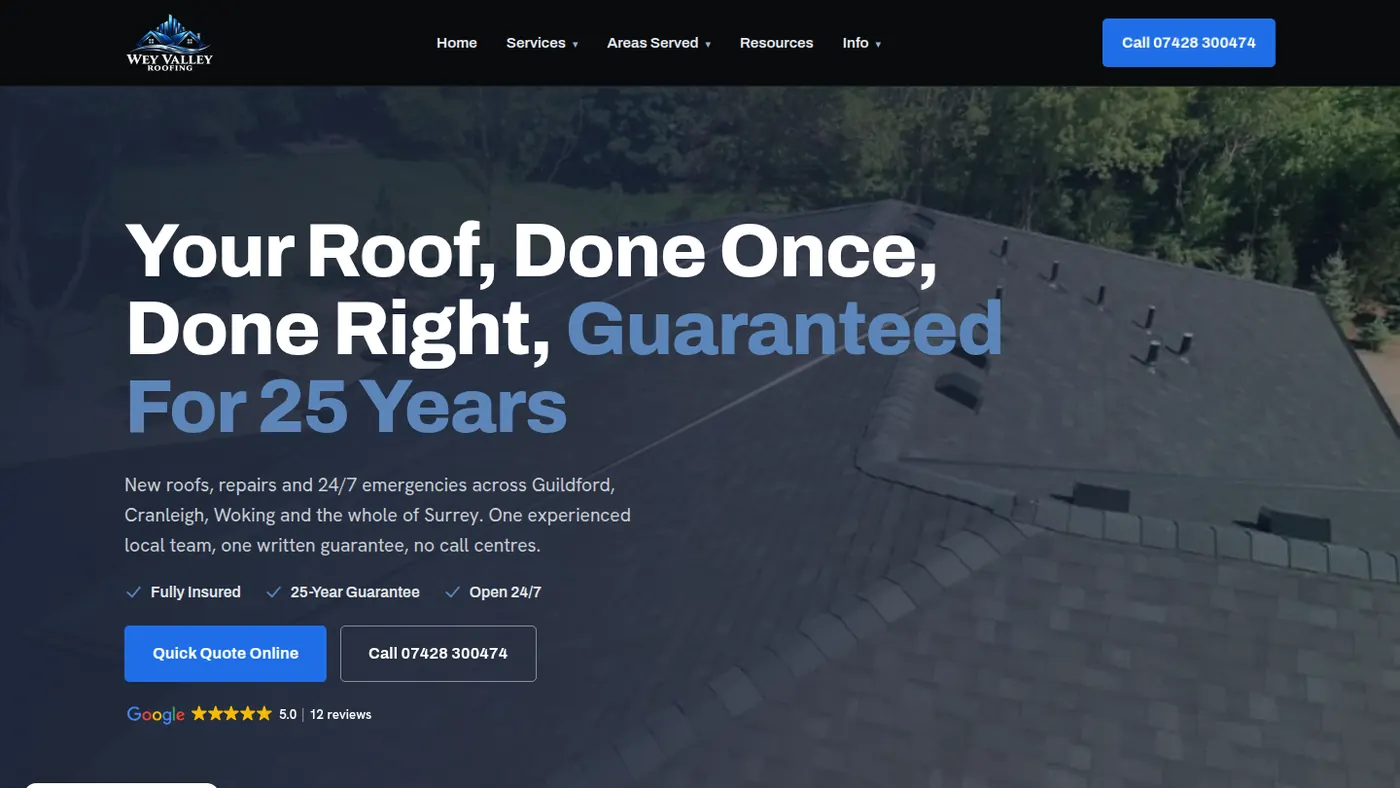
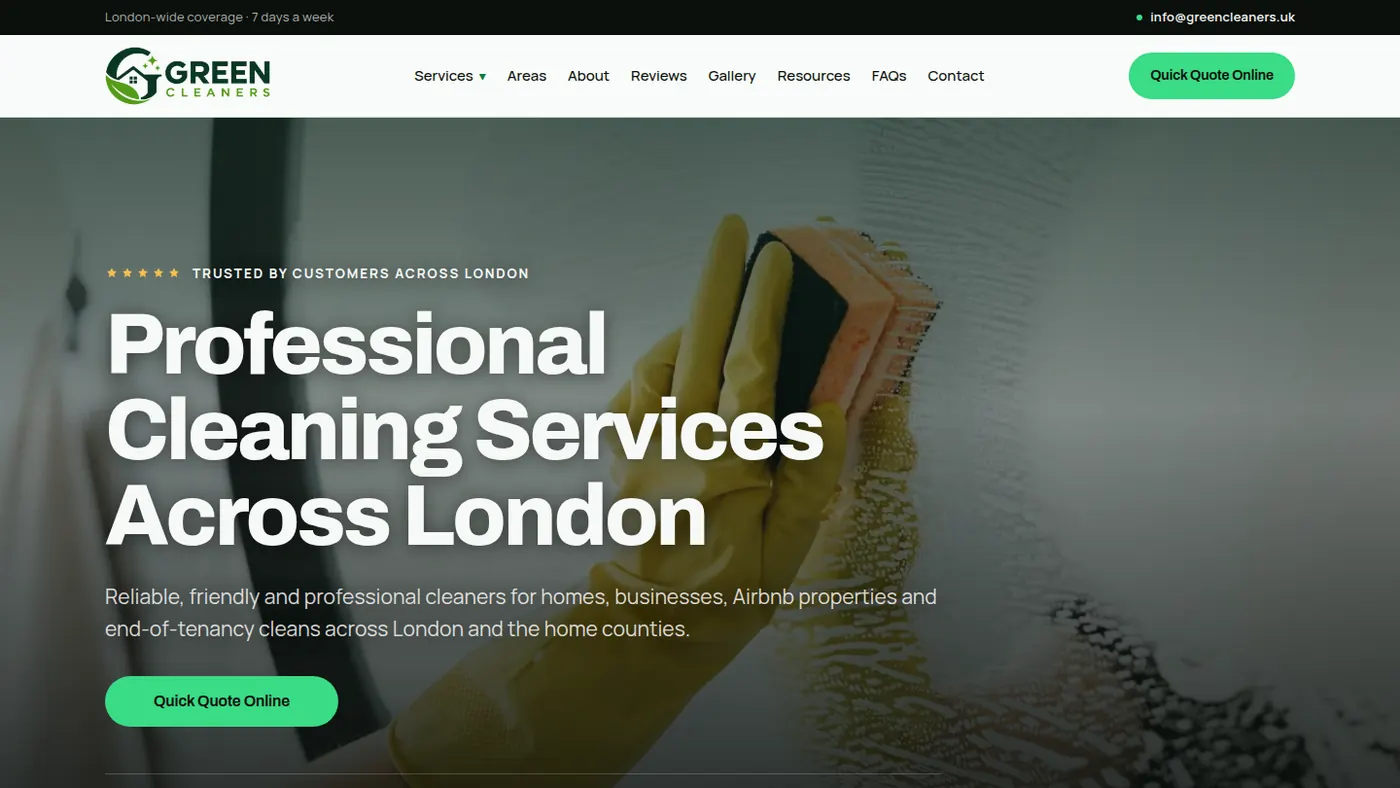
The page plan is a simple list: the services you want to be found for, and the towns you genuinely work in. A roofer might list new roofs, roof repairs, flat roofs, chimney work and guttering, across eight towns. A cleaner might list domestic, end of tenancy, office and Airbnb cleans across a dozen London areas. Every site we have built starts from a list like this.
Each item on that list becomes a page, or a clear section of one, with its own purpose. That plan decides the page titles, the headings and the links between pages. It is the single most important SEO decision on a trade website, and it happens before anyone opens a design tool.
Service pages: one job, one page
Google ranks pages, not whole websites. If one page tries to cover boiler repair, bathroom fitting and drain unblocking at once, it is not clearly about any of them. A page for each main job gives Google a clear match for each search, and gives the customer exactly what they were looking for.
A good service page explains what the job involves, what affects the price, how long it takes and why someone should choose you. It shows photos of that type of job, a few relevant reviews and the quote form. That is useful to the customer and clear to Google, which is the point. Our guide to web design for heating engineers shows the same idea from the customer's side.
Town pages that are genuinely useful
Town pages have a bad reputation, because many sites churn out dozens of near-identical pages with the town name swapped. Google has become good at ignoring those.
A useful town page is different. It covers a place you genuinely work, mentions the jobs you do most there, the kinds of properties you see, how quickly you can usually get out, and reviews from customers in that area. We only build town pages for areas you actually cover, and we write each one to stand on its own.
The technical parts you never see
Underneath the design, inbuilt SEO covers a set of technical details that are easy to get right at the start and fiddly to fix later:
- Page titles that lead with the service and the place, with your business name last.
- One main heading per page and a sensible structure of subheadings underneath.
- Meta descriptions written for each page, so search results read well.
- Schema markup that tells Google your business type, services and areas in a format it reads directly.
- Speed: small images, no heavy page builder, fast hosting.
- A sitemap and Search Console set up, so new pages are found quickly.
Your Google Business Profile is part of the same job
For most trades, the map results at the top of a local search bring in as many calls as the website listings below them. Those map results come from your Google Business Profile.
Inbuilt SEO treats the profile and the website as one piece of work. The business name, services, areas and categories should match on both, so Google sees one consistent business. We set up or tidy the profile alongside the build and link it to the right pages on the site. We also give you a simple way to ask customers for reviews, because fresh reviews help both.
What inbuilt SEO cannot do
No one can honestly guarantee first place on Google, and you should be wary of anyone who does. Competition varies from town to town, and rankings take time to build.
What inbuilt SEO gives you is the right foundation: a fast, clearly structured, clearly local site that gives Google every reason to show it. Add steady reviews and good photos of your work over time, and the site keeps getting stronger. It is also why our hosting is FREE forever: the site keeps working for you without a monthly bill attached. If you would like to see what a page plan would look like for your business, use the form on this page and we will sketch one out.